
What is the Client Toolkit?
The Client Toolkit is the foundation of Coming Home, enabling organizations to securely create, manage, and maintain a client’s central record.
It powers all core workflows, including:
- Program enrollment
- Service tracking (Assistances)
- Longitudinal Assessments
- Goals, Tasks, and Challenges (Milestones)
- Case notes and files
- Reporting and compliance
Each client has their own Client Toolkit, which acts as the single source of truth for all case management activities.
Who Can Access the Client Toolkit
-
Organisation Administrators
-
Can add, archive, and assign clients
-
Can view and manage all client toolkits within the organization
-
-
Team Members, Law Enforcement / Victim Advocates, and Interns
-
Can view and work within the Client Toolkit only for clients assigned to them
-
Cannot add, archive, or assign clients
-
-
Clients
-
Do not have access to the Client Toolkit
-
This access model ensures teams can collaborate effectively on assigned cases while protecting client privacy, data integrity, and compliance requirements.
What You Can Do in the Client Toolkit
The Client Toolkit is organized into key sections that support coordinated care and reporting.
1. Information
The foundation of the client record.
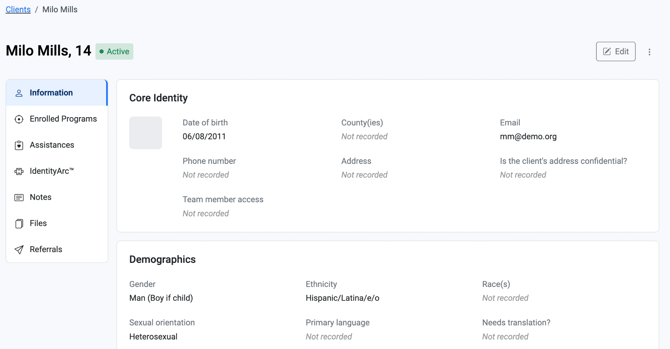
Includes:
- Core identity and contact details
- Demographics and accessibility needs
- HMIS and VOCA-compliant fields (where applicable)
- Referral and intake information
Why it matters:
This section supports eligibility, compliance, demographic filtering and reporting across the platform.
2. Enrolled Programs
Tracks all programs a client is part of.
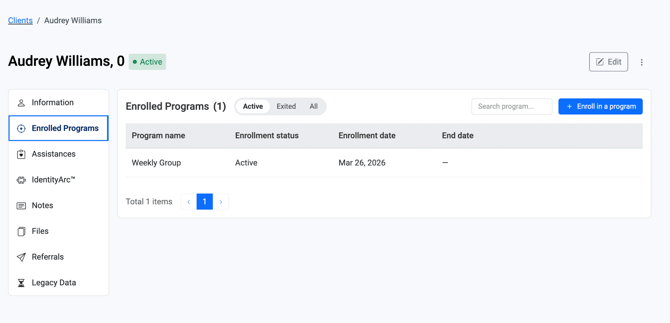
Includes:
- Program name and status
- Enrollment dates
- Program participation details
- Client assessments
Why it matters:
Provides visibility into services received, asses their improvements in their time enrolled in a program, and supports program-level reporting.
3. Assistances
Logs all support provided to the client.
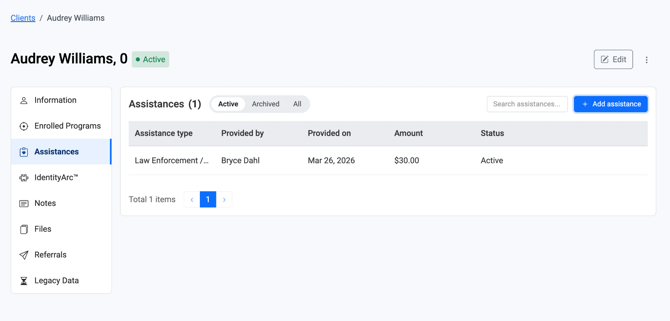 Includes:
- Financial assistance
- Material or emergency support
- Service-based assistance
- Dates, categories, amounts, and notes
Why it matters:
Creates a complete record of services delivered for reporting and compliance.
4. Assignments
Tracks client progress and outcomes over time.
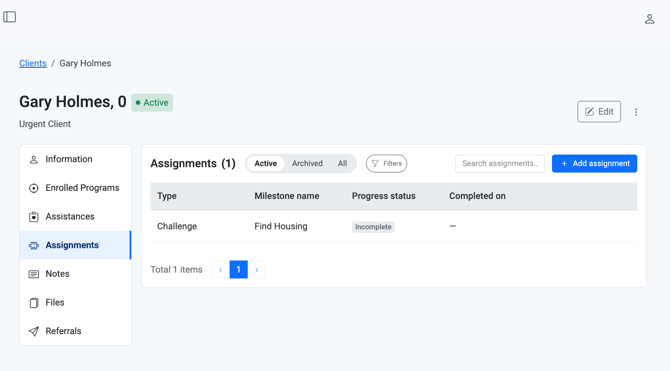
Includes:
- Challenges (long-term objectives)
- Goals (short-term milestones)
- Tasks (day-to-day actions)
- Outcomes achieved
Why it matters:
Supports strengths-based case management and measurable impact tracking.
5. Notes
A centralized space for documentation.
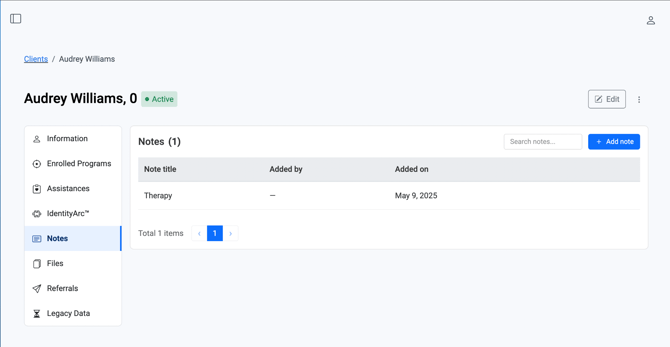
Includes:
- Session notes
- Follow-ups and check-ins
- Case updates and observations
Why it matters:
Ensures continuity of care and team collaboration.
6. Files
Secure document storage linked to the client.
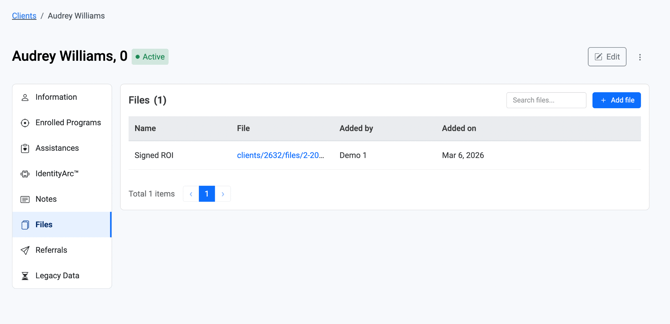 Includes:
- Intake and consent forms
- Assessments and reports
- Supporting documentation
Why it matters:
Keeps all relevant documents organized and accessible to authorized users.
7. Referrals
Tracks how clients are connected to services across partners.
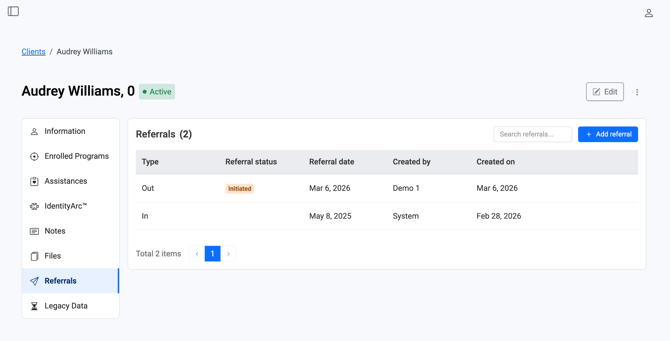
Includes:
- Referrals into your organization
- Referrals to external services or providers
Why it matters:
Supports coordinated care and helps document service pathways, which is especially important for compliance and reporting (e.g. VOCA).
Tips/Best Practices
- Complete key fields during intake: Start with accurate information in the Information section to avoid gaps later.
- Keep data updated: Regularly review and update client profiles, program statuses, and services.
- Log assistances consistently: Record services as they happen to maintain accurate reporting.
- Use Assignment actively: Track goals and progress to better understand client outcomes.
- Respect client consent: Always collect sensitive information (e.g. demographics, victimization) voluntarily and respectfully.
- Leverage standardized fields: Using HMIS and VOCA-compliant fields improves data quality and prepares your organization for reporting and funding opportunities.
Related Articles
- Understanding HMIS-Compliant Fields
- Understanding VOCA-Compliant Fields
- How To Add a New Client
- How to Edit Client Information
- How to Assign Team Members to a Client
- Understanding User Roles and Permissions
- Logging Assistances and Services
- Managing Program Enrollments
Need more help?
If you have questions about using the Client Toolkit or managing client data:
- Reach out to your Organization Administrator for guidance on permissions and workflows
- Contact the Coming Home support team for technical assistance
- Refer to related guides on Clients & Profiles, Assistances, and Programs for step-by-step instructions