
What this feature does
Program-based assessments enable service providers to track a client’s progress across key well-being categories at critical stages of their journey within a program. By capturing data at Entry, During, and Exit, organizations gain a comprehensive view of outcomes, progress, and overall impact over time.
Assessments are directly linked to a client’s specific program enrollment, ensuring that all data reflects the context of the services received.
Who can use this feature
- Organization Administrators – Can add assessments for clients assigned to them.
- Team Members – Can add assessments for assigned clients.
- Interns / Volunteers – Can add assessments for assigned clients.
- Law Enforcement / Victim Advocates – Do not have access to add assessments.
Before you begin
Before adding an assessment, ensure that:
- The client has been created in the system.
- The client is enrolled in at least one program.
- You have the appropriate permissions to add assessments.
How to add an assessment to a client
Step 1: Navigate to the Clients section
- From the left-hand sidebar, click Clients.
- Use the search bar to locate the client.
- Click the client’s name to open their Client Toolkit.
Step 2: Access the client’s enrolled programs
- Within the client profile, select Enrolled Programs.
- This section displays all programs the client is currently or previously enrolled in.
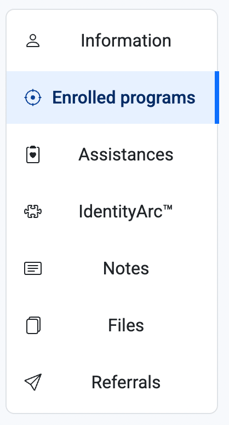
Step 3: Select the relevant program
- Click the program for which you want to record the assessment.
- In the program enrollment view, select the Assessments tab.
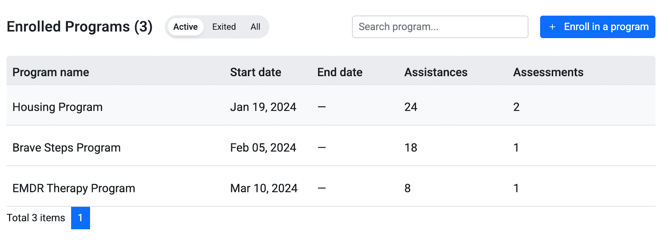
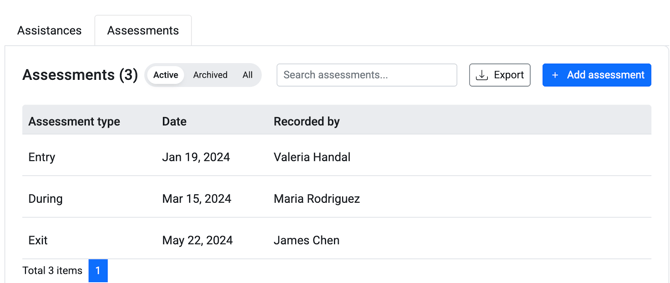
Step 4: Add a new assessment
1. Click + Add Assessment.
-
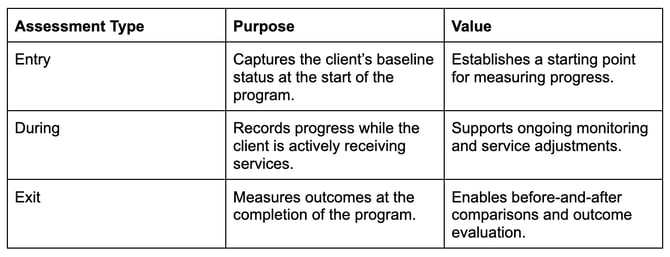
- Entry – Captures the client’s baseline status at the start of the program.
- During – Records progress while the client is actively receiving services.
- Exit – Measures outcomes at the completion of the program.
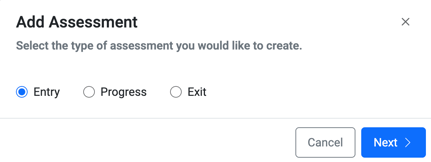
Step 5: Complete the assessment categories
You will be required to complete information across three key well-being domains:
1. Living Situation & Needs
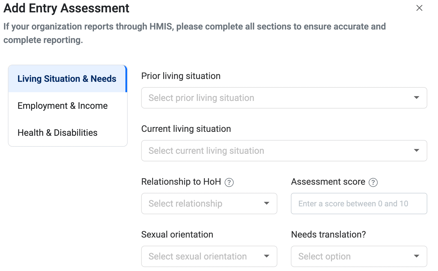
This section captures housing stability, household context, and immediate service needs, including:
- Prior Living Situation – Where the client lived before enrollment (e.g., emergency shelter, transitional housing, staying with friends/family).
- Current Living Situation – Housing status at the time of the assessment.
- Relationship to Head of Household – Client’s role within the household.
- Sexual Orientation – Optional demographic information.
- Needs Translation – Indicates whether interpretation services are required.
2. Employment & Income
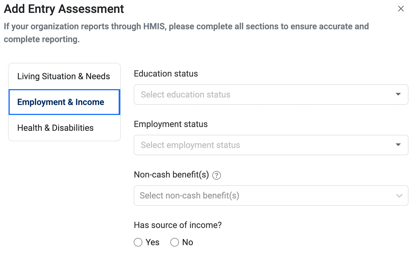
This section evaluates economic stability and financial resources:
- Education Status – Whether the client is attending school or training.
- Employment Status – Current work situation (e.g., full-time, part-time, unemployed).
- Non-Cash Benefits – Access to public assistance or support services.
- Has Source of Income – Indicates whether the client receives any form of income.
3. Health & Disabilities
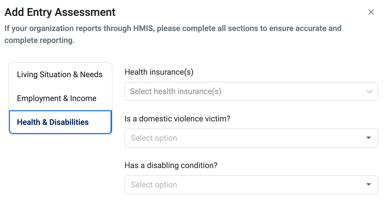
This section captures health access and vulnerability indicators:
- Health Insurance(s) – Type of health coverage (e.g., Medicaid, Medicare, private insurance, none).
- Is a Domestic Violence Victim? – Indicates experience of domestic or interpersonal violence.
- Has a Disabling Condition? – Identifies physical, mental, or developmental disabilities.
Step 6: Save the assessment
- After completing all required fields, click Create Assessment.
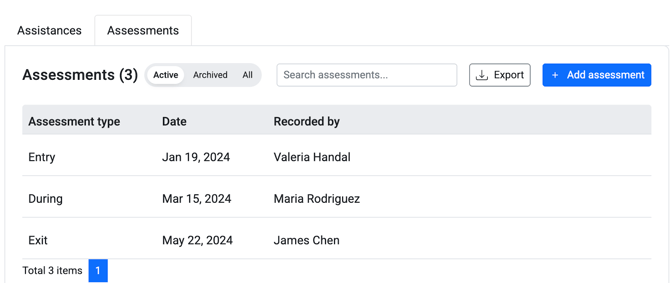
- Return to the Assessments table within the selected program to confirm that the assessment has been successfully recorded.
Result
Once saved:
- The assessment appears in the Enrolled Program-Based Assessments Dashboard.
- It contributes to a longitudinal view of the client’s progress.
- The data supports program evaluation, outcome measurement, and HMIS/CoC compliance.
Understanding assessment types
Tips / Best Practices
- Complete all assessment sections to ensure accurate reporting.
- Use consistent assessment timing (Entry, During, Exit) for meaningful comparisons.
- Review assessments regularly to monitor client progress.
- Ensure data accuracy to support compliance and funding requirements.
Related Articles
- Overview of Assessments
- How to Edit/ Update an Assessment
- Overview of Programs
- How to Enroll a Client in a Program
Need more help?
If you need assistance adding an assessment, please contact your Organization Administrator or reach out to our Support Team through the in-platform chat and select “Report an issue.”